

Introduction
The easyjet flight u24429 emergency drew widespread attention after a scheduled European flight was forced to turn back shortly after departure. What began as a routine journey quickly became an unexpected safety event, prompting questions about onboard incidents, airline decision-making, and emergency protocols. Understanding what led to the flight’s return helps explain how airlines prioritize passenger safety and manage sudden situations in the air.
Basic Details of the Flight
The flight involved in the easyjet flight u24429 emergency was operated by easyJet, one of Europe’s largest low-cost carriers. The aircraft was scheduled to fly from Lyon Saint-Exupéry Airport to Porto.
An Airbus A320 was assigned to the route, a model commonly used for short- and medium-haul European flights. Boarding and departure were reported as normal, with no weather-related or mechanical warnings before takeoff.
Timeline of the Emergency Situation
Takeoff and Initial Climb
Soon after departure, while the aircraft was climbing and still within regional airspace, an unexpected onboard situation developed. The pilots were alerted to a serious issue in the passenger cabin that required immediate assessment.
Emergency Declaration
Within a short period, the flight crew declared an emergency. In aviation, this step is taken only when safety could be compromised if the flight continues. The easyjet flight u24429 emergency decision allowed air traffic control to prioritize the aircraft and clear airspace for a rapid return.
Return to Lyon
After coordination with controllers, the aircraft turned back toward Lyon. Emergency services at the airport were notified as a precautionary measure, which is standard procedure even when there is no technical fault.
The aircraft landed safely, and the situation remained under control throughout the descent and landing.
What Caused the easyjet flight u24429 emergency
The confirmed cause of the easyjet flight u24429 emergency was not related to engine failure, system malfunction, or weather conditions. Instead, it stemmed from a serious passenger-related incident.
A passenger experienced an acute psychological episode shortly after takeoff. The individual became highly distressed and attempted to move toward restricted areas of the aircraft. Given the strict security rules that protect the cockpit, this behavior was treated as a major safety concern.
Cabin crew acted quickly to de-escalate the situation and prevent further risk to passengers, crew, and flight operations.
Cabin Crew and Passenger Response
Crew Training in Action
Cabin crew members are trained to handle far more than routine service. Their training includes conflict management, medical response, and threat containment. During the easyjet flight u24429 emergency, crew members followed established procedures calmly and professionally.
They isolated the situation, restrained the disruptive passenger when necessary, and kept other passengers informed without causing panic.
Passenger Cooperation
Several passengers assisted the crew by following instructions and remaining calm. This cooperation played an important role in maintaining order inside the cabin while the aircraft returned to the airport.
Landing Procedures and Airport Response
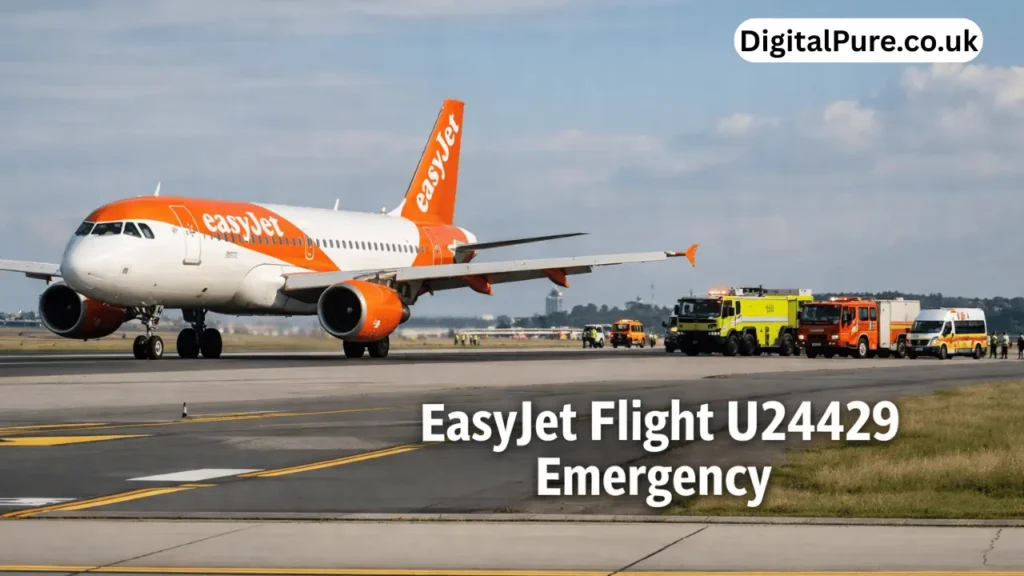
After landing back at Lyon, emergency vehicles were positioned near the runway as a precaution. This does not mean the aircraft was in danger but ensures immediate support if required.
Local authorities boarded the aircraft, and the passenger involved in the incident was removed for medical evaluation. Other passengers were guided off the plane safely and provided with assistance regarding onward travel.
No injuries were reported, and there was no damage to the aircraft during the easyjet flight u24429 emergency.
Why Passenger Incidents Can Trigger Flight Emergencies
Many travelers associate aviation emergencies with technical failures, but passenger behavior can also force urgent decisions. Situations involving aggression, psychological distress, or attempts to breach restricted areas are treated with the highest level of seriousness.
The easyjet flight u24429 emergency demonstrates that even a single onboard incident can impact the entire operation if it threatens safety or security. Returning to the nearest suitable airport is often the safest and fastest solution.
Safety Standards and Decision-Making in Aviation
Commercial aviation operates on a strong safety-first philosophy. Pilots are trained to choose the most conservative option whenever there is uncertainty. Declaring an emergency does not mean something has gone wrong beyond control; it means the crew is actively preventing risk.
In the case of the easyjet flight u24429 emergency, the decision to return ensured that the situation could be resolved on the ground, where support services are immediately available.
What Passengers Can Learn From This Incident
For everyday travelers, the key lesson from the easyjet flight u24429 emergency is reassurance. The systems worked exactly as intended. The crew identified a potential risk early, communicated with authorities, and completed a safe landing.
Passengers should always:
- Follow cabin crew instructions
- Stay calm during unexpected events
- Understand that emergency landings are often precautionary
Such incidents highlight why commercial flying remains one of the safest forms of transport.
Broader Impact on Airline Operations
Events like the easyjet flight u24429 emergency also influence airline policies. Airlines continuously review training programs, mental health response procedures, and onboard security measures to adapt to real-world situations.
While disruptions are inconvenient, safety decisions always take priority over schedules.
Frequently Asked Questions
1. What was the main reason for the easyjet flight u24429 emergency?
The emergency was caused by a serious passenger-related psychological incident, not a technical or mechanical issue.
2. Did the aircraft suffer any damage?
No, the aircraft landed safely and did not sustain any damage.
3. Were passengers in danger during the incident?
Passengers were not in immediate danger. The emergency declaration was a preventive safety measure.
4. Is it common for flights to return due to passenger behavior?
Such cases are rare, but when they occur, airlines respond quickly to protect everyone onboard.
5. Should travelers be concerned about similar emergencies?
No. The easyjet flight u24429 emergency shows that trained crews and strict procedures effectively manage unexpected situations.
You May Also Read: Uyç: Guide to Turkey’s National Qualifications Framework