

Introduction
The pilning warehouse planning dispute has drawn widespread attention as a quiet rural village found itself facing the consequences of a planning decision made generations ago. What might seem like a routine warehouse development has instead triggered strong reactions from residents, exposing how outdated planning permissions can clash with modern expectations. The construction of a large industrial building close to long-established homes has raised serious questions about fairness, community involvement, and whether historic approvals should still shape today’s landscapes.
Background of the Development in Pilning
Pilning is a small village in South Gloucestershire known for its rural surroundings and open landscapes. For years, the area maintained a largely agricultural and residential character. That changed when construction began on a massive warehouse structure near existing homes.
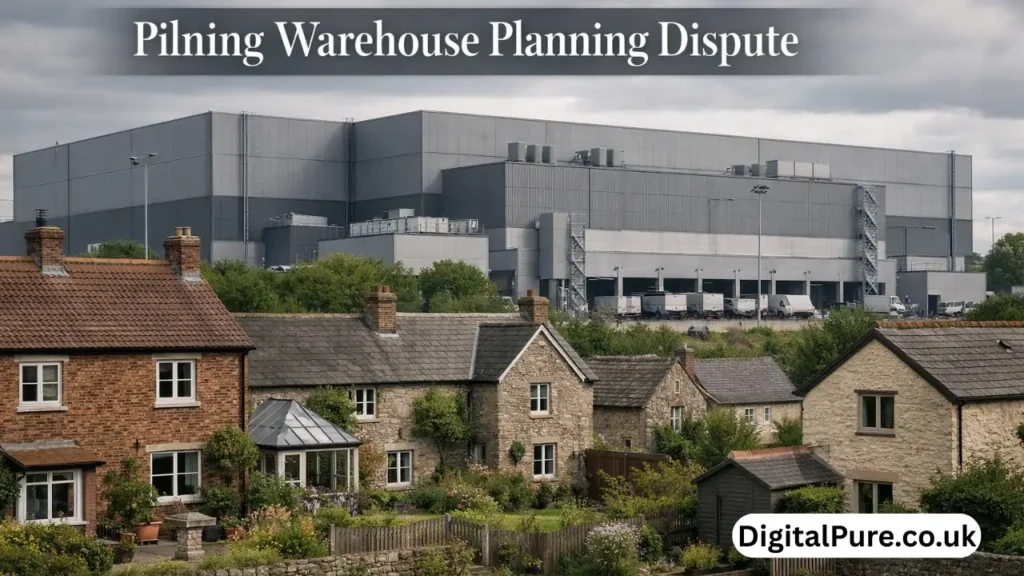
The size of the building surprised many locals. Described by residents as comparable in scale to a stadium, the warehouse stands significantly taller and broader than nearby houses. The sudden transformation of the landscape sparked concern, confusion, and eventually organized opposition.
The pilning warehouse planning dispute began gaining public attention once it became clear that the development had not gone through a standard modern planning application process.
The 1957 Planning Permission at the Heart of the Dispute
How Historic Consent Allowed Modern Construction
The central issue in the pilning warehouse planning dispute revolves around a planning permission granted in 1957. During that period, planning laws were far less detailed than they are today. Permissions were often broad, and long-term oversight mechanisms were limited.
Because the original consent was never formally revoked or expired, developers were able to rely on it decades later. Legally, this meant the site retained industrial development rights. Local authorities reportedly had limited power to reassess the proposal under current planning policies.
This technical legal foundation is what allowed a large contemporary warehouse to proceed without the same level of scrutiny that would normally apply today.
Why the Old Permission Became Controversial
In the 1950s, industrial buildings were typically much smaller and less complex. The scale of modern logistics warehouses was not anticipated when the original consent was granted. As a result, residents argue that the spirit of the old permission does not align with present-day realities.
The pilning warehouse planning dispute highlights the gap between historic planning frameworks and modern development expectations.
Impact on Local Residents
Visual and Environmental Changes
One of the strongest objections raised by residents concerns the visual dominance of the warehouse. Homes that once overlooked open countryside now face a large industrial wall. The building’s height and mass have significantly altered sightlines, sunlight exposure, and the overall rural atmosphere.
For many villagers, the issue is not simply about development, but about the loss of identity and landscape character.
Concerns About Property Values and Quality of Life
Another key element of the pilning warehouse planning dispute involves concerns about property values. Homeowners believe the proximity of a major industrial building could reduce market appeal. While property valuation depends on multiple factors, perception alone can influence buyer interest.
In addition to financial concerns, residents have raised questions about potential noise, traffic increases, and long-term operational impacts once the warehouse becomes fully active.
Lack of Consultation
A recurring theme in community feedback is the feeling of exclusion. Many residents say they were unaware of the full scope of the project until construction had already started. Because the development relied on historic consent, it reportedly did not require the same public consultation process as a new planning application.
This perceived lack of engagement has intensified frustration and fueled the pilning warehouse planning dispute further.
Political Response and National Attention
As media coverage expanded, the dispute moved beyond local discussion. Elected representatives raised concerns about the planning loophole that allowed the development to proceed.
Some policymakers have argued that the case demonstrates the need to review legacy planning permissions. The debate centers on whether old consents should automatically remain valid regardless of scale changes or whether safeguards should require reassessment under current standards.
The pilning warehouse planning dispute has therefore become part of a wider national conversation about planning reform, transparency, and accountability.
The Broader Rise of Large Warehouses in Rural England
The dispute in Pilning does not exist in isolation. Across the UK, logistics and distribution centers have expanded rapidly due to growth in online retail and supply chain demands. Large warehouses are often located near motorways and transport corridors, many of which pass through rural regions.
Supporters argue that such developments generate employment opportunities and strengthen economic infrastructure. Critics counter that the pace and scale of construction risk permanently altering rural landscapes.
The pilning warehouse planning dispute reflects this broader tension between economic development and countryside preservation.
Legal and Planning System Implications
Challenges in Balancing Old and New Regulations
Planning systems must balance certainty for developers with fairness for communities. Historic permissions were designed to provide legal stability. However, when those permissions are used decades later for projects far larger than originally envisioned, conflict can arise.
The pilning warehouse planning dispute raises an important question: should there be a time limit or scale review mechanism attached to older consents?
The Case for Reform
Some planning experts suggest introducing automatic review triggers when developments significantly exceed historical expectations. Others propose clearer expiration frameworks for unused permissions.
While reform discussions continue, the Pilning case has already demonstrated the practical consequences of leaving historic approvals untouched.
Why the Pilning Warehouse Planning Dispute Matters
The pilning warehouse planning dispute is significant because it reveals structural weaknesses within planning legislation. It shows how decisions made generations ago can shape modern communities in unexpected ways.
Beyond legal arguments, the dispute touches on trust, transparency, and community voice. Residents want assurance that development decisions reflect contemporary standards and meaningful consultation.
For policymakers, the case serves as a reminder that planning law must evolve alongside social, economic, and environmental realities.
Conclusion
The pilning warehouse planning dispute is more than a disagreement about a single building. It is a case study in how outdated planning permissions can collide with modern expectations. The development has altered the physical landscape of Pilning, but it has also reshaped conversations about planning reform across the country.
As debates continue, the dispute stands as a clear example of the need to balance growth with accountability. Whether future legislation changes as a result remains to be seen, but the impact of this case will likely influence planning discussions for years to come.
Frequently Asked Questions
1. What is the pilning warehouse planning dispute?
The pilning warehouse planning dispute refers to controversy surrounding a large warehouse built in Pilning using a planning permission granted in 1957.
2. Why was a 1957 planning permission still valid?
Planning permissions granted decades ago can remain legally valid if they were not formally revoked or expired.
3. Why are residents upset about the development?
Residents are concerned about the warehouse’s size, visual impact, possible traffic increases, and the perceived lack of consultation.
4. Has the dispute influenced planning reform discussions?
Yes, the pilning warehouse planning dispute has prompted calls for reviewing historic permissions and updating planning safeguards.
5. Is this type of dispute common in rural England?
While not identical, similar tensions have emerged in rural areas where large logistics warehouses are built near established communities.
You May Also Read: Stanley Street Motors Lowestoft Closes: End of a 45-Year Era in the Local Motor Trade