

Introduction
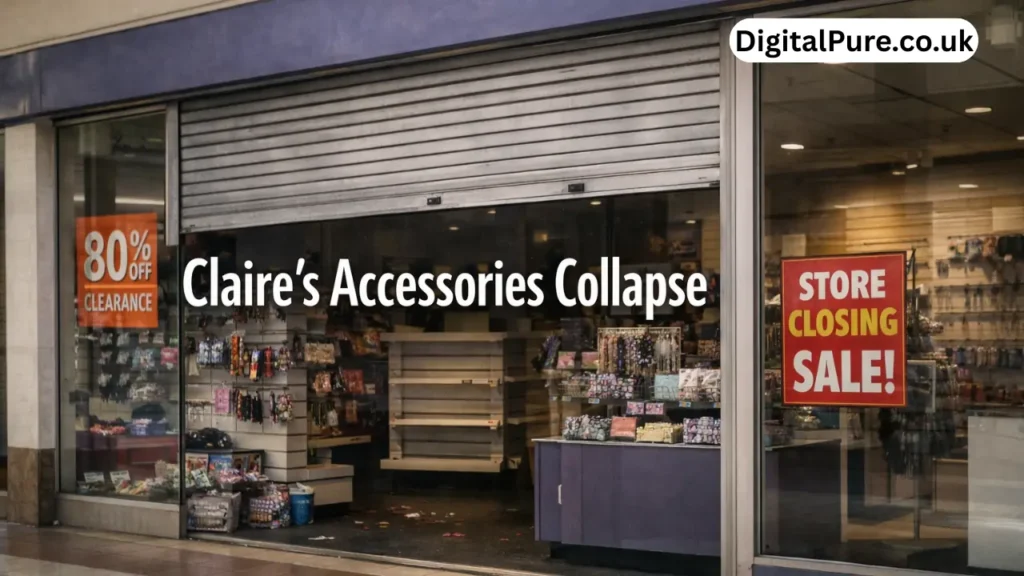
The claire’s accessories collapse stands out as one of the most significant retail downturns in recent years. Once a dominant name in youth fashion and accessories, Claire’s built its success on colourful stores, affordable products, and a loyal younger audience. For decades, it was a familiar presence in shopping malls and high streets across multiple countries.
However, shifting consumer habits, rising operational costs, and growing online competition gradually weakened the brand’s position. What followed was a series of financial struggles, store closures, and restructuring efforts that reflected broader challenges facing traditional retail businesses. The story of the claire’s accessories collapse offers valuable insight into how even well-known brands can falter when market dynamics change.
A Brief Introduction to Claire’s as a Brand
Claire’s built its reputation by targeting tweens and teenagers with affordable jewellery, hair accessories, and novelty fashion items. For many customers, visiting Claire’s was a memorable experience tied to childhood, especially due to its in-store ear-piercing service.
At its peak, the company operated thousands of stores across North America, Europe, and other international markets. The brand’s strength was its physical presence and impulse-buy product strategy, which worked well during the height of shopping mall culture.
However, the same model later became a major weakness and played a central role in the claire’s accessories collapse.
Early Financial Struggles That Set the Stage
Rising Debt and Overexpansion
Behind the colourful storefronts, Claire’s was carrying a heavy financial burden. Years of aggressive expansion and private ownership left the company with significant debt. When sales began to slow, this debt limited flexibility and made recovery difficult.
The first major warning sign appeared when the company filed for bankruptcy protection in 2018. Although this allowed operations to continue, it did not fully address the long-term financial imbalance.
How Changing Shopping Habits Accelerated the Collapse
Decline of Mall and High-Street Traffic
A major factor behind the claire’s accessories collapse was the steady decline in foot traffic at shopping malls and high streets. Younger consumers increasingly preferred online shopping, reducing spontaneous in-store purchases that once drove Claire’s revenue.
Physical locations that were once profitable became costly liabilities as rent, utilities, and staffing expenses continued to rise.
Digital Expectations of Younger Consumers
Claire’s core audience is digitally savvy. Social media, fast trend cycles, and online discovery now dominate how teens shop. While competitors adapted quickly, Claire’s digital transformation moved slowly, causing a disconnect between the brand and its target market.
Competition From Online and Fast-Fashion Retailers
The accessories market became increasingly competitive with the rise of low-cost online retailers and fast-fashion brands. These competitors could introduce new designs faster and sell them at lower prices without the overhead costs of physical stores.
Claire’s struggled to match this speed and pricing. Customers could easily find similar products online, often without leaving their homes. This shift further weakened in-store sales and intensified the claire’s accessories collapse.
Economic Pressures and Rising Operating Costs
Cost Inflation and Supply Chain Challenges
Beyond competition, broader economic pressures also played a role. Rising wages, increased shipping costs, and supply chain disruptions added financial strain. For a retailer operating hundreds of stores, even small cost increases had a major impact.
These pressures reduced profitability and forced difficult decisions, including store closures and workforce reductions.
Impact on Employees and Local Communities
The collapse did not only affect the company—it affected people. Thousands of employees faced uncertainty as stores entered administration or shut down entirely. Many shopping centres also suffered from reduced foot traffic after store closures, impacting nearby businesses.
The claire’s accessories collapse highlighted how vulnerable retail workers and local economies can be when major brands fail.
Attempts at Restructuring and Survival
After multiple financial restructurings, parts of the business attempted to continue under new ownership and revised strategies. Some stores remained open, while others closed permanently depending on regional performance.
Despite these efforts, the brand’s overall footprint shrank significantly, and confidence in long-term recovery remained uncertain.
Key Lessons From the claire’s accessories collapse
The downfall of Claire’s offers several important lessons for modern retailers:
- Brands must evolve alongside consumer behavior, especially when targeting younger audiences
- A strong online presence is no longer optional
- Heavy debt can limit a company’s ability to adapt during market shifts
- Physical stores must offer experiences that add value beyond online shopping
The claire’s accessories collapse serves as a clear warning that nostalgia and brand recognition alone cannot guarantee survival.
Conclusion: Why This Collapse Still Matters
The claire’s accessories collapse is more than the story of one struggling retailer. It reflects the broader transformation of the retail industry and the risks faced by businesses that fail to adapt quickly enough.
While Claire’s remains a familiar name to many, its decline underscores the importance of innovation, financial discipline, and understanding consumer expectations. For retailers today, the message is simple but critical: adapt, evolve, or risk being left behind.
Frequently Asked Questions (FAQs)
1. What is meant by the claire’s accessories collapse?
It refers to the financial decline, bankruptcies, and store closures experienced by Claire’s due to debt, reduced foot traffic, and increased competition.
2. Was online shopping a major reason for the collapse?
Yes, the shift toward online and social commerce significantly reduced in-store sales, which were central to Claire’s business model.
3. Did Claire’s completely shut down?
No, some stores continued operating after restructuring, but many locations closed permanently.
4. How were employees affected?
Thousands of employees faced job losses or uncertainty due to store closures and administration processes.
5. What can other retailers learn from this collapse?
Retailers can learn the importance of digital adaptation, cost control, and aligning business strategies with changing consumer behavior.
You May Also Read: Tesco Shopper Clears Cinnamon Buns: The Viral Shopping Debate