

Introduction
Modern industries rely heavily on precise measurements and design boundaries to ensure products function correctly and fit within intended systems. One of the important concepts used to maintain these limits is the dimensional envelope. This concept plays a key role in engineering design, manufacturing processes, packaging development, and logistics operations.
Understanding the dimensional envelope helps engineers, designers, and logistics professionals maintain accuracy, prevent component interference, and optimize the use of space. By defining the maximum space an object can occupy, organizations can improve product compatibility, manufacturing efficiency, and shipping performance.
What Is a Dimensional Envelope?
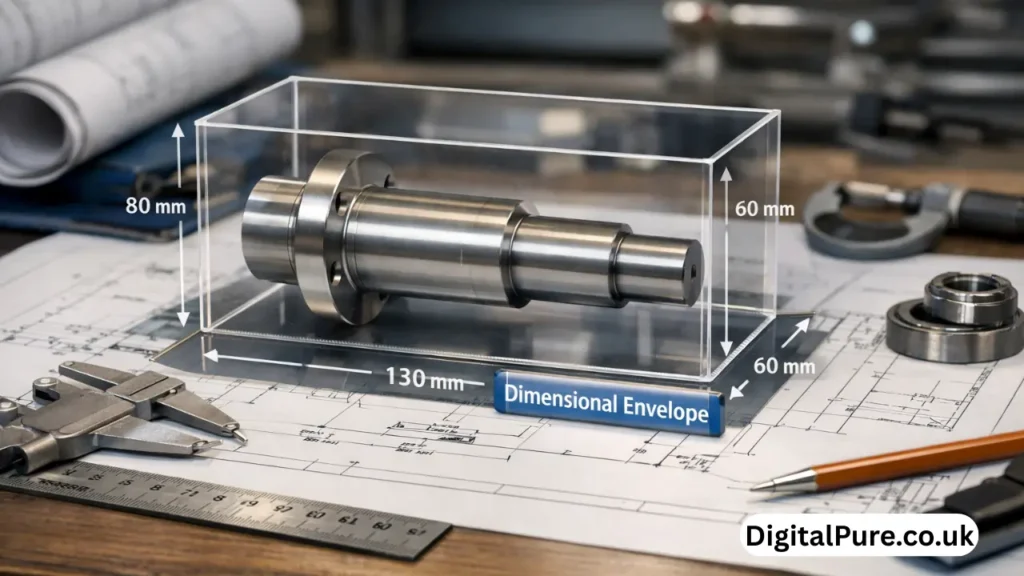
A dimensional envelope refers to the maximum physical boundary within which a part, product, or package must fit. It defines the outer limits of an object’s dimensions so that it can operate properly within a system or environment.
In simple terms, the dimensional envelope represents the space that a component or product is allowed to occupy without causing interference or operational issues. This concept is widely used in product design and engineering because it ensures that components fit together as intended.
For example, if a mechanical component must fit inside a housing or machine frame, engineers define the available space as the dimensional envelope. Any part designed for that space must remain within those limits. If the component exceeds the dimensional envelope, it may not fit correctly or could interfere with nearby parts.
Importance of Dimensional Envelope in Engineering Design
Engineering design requires precise control over dimensions and spatial boundaries. The dimensional envelope helps engineers define these boundaries so that multiple components can function together within a system.
During the design stage, engineers analyze available space and establish a dimensional envelope for each component. This ensures that parts fit properly during assembly and prevents unexpected collisions between parts.
In complex systems such as vehicles or industrial machines, many components operate within limited space. Without a clearly defined dimensional envelope, parts may overlap or create assembly challenges. By setting dimensional limits early in the design process, engineers can reduce design conflicts and improve overall system reliability.
Another benefit of using a dimensional envelope in engineering design is improved communication between teams. When every component has defined spatial limits, different departments can design their parts with confidence that they will fit together.
The Envelope Principle in Manufacturing
In manufacturing and quality control, the dimensional envelope is closely related to the envelope principle used in geometric dimensioning and tolerancing. This principle ensures that manufactured parts do not exceed the boundary of their ideal geometric shape.
Even if a part falls within its size tolerance range, its shape must still remain within the dimensional envelope defined by the design specifications. This rule prevents parts from becoming distorted or oversized during production.
For example, consider a cylindrical shaft produced in a manufacturing facility. The shaft may have a permitted diameter range, but its surface must remain within the perfect cylindrical boundary defined by the dimensional envelope. If the shaft bends or becomes irregular, it could exceed that boundary even if its measured diameter remains within tolerance.
Applying this principle improves product quality and helps ensure that parts will fit correctly during assembly.
Dimensional Envelope in Packaging Design
The dimensional envelope is also important in packaging design. Companies must design packaging that protects the product while minimizing wasted space and excess materials.
Packaging engineers analyze the size and shape of a product and create a package that fits closely around it. The outer dimensions of the package form the dimensional envelope of the packaged product.
Optimizing the dimensional envelope in packaging provides several advantages. It reduces the amount of packaging material required, lowers production costs, and improves storage efficiency. When packages occupy less space, companies can store and transport more products within the same area.
Many businesses regularly redesign their packaging to improve the dimensional envelope and reduce unnecessary empty space inside boxes.
Impact of Dimensional Envelope on Shipping and Logistics
In logistics and transportation, the dimensional envelope of a package directly affects shipping efficiency and costs. Transportation companies must carefully manage the space available in trucks, shipping containers, and aircraft.
Large packages with oversized dimensional envelopes occupy valuable cargo space. Even if a package is lightweight, it may still require more room during transport. Because space is limited, shipping companies consider both the size and weight of packages when calculating shipping charges.
Businesses that optimize the dimensional envelope of their packaging can significantly reduce shipping expenses. Smaller packages allow more items to be transported in a single shipment, improving overall logistics efficiency.
Warehousing operations also benefit from optimized dimensional envelopes. Packages that are designed to fit efficiently on shelves or pallets improve storage organization and reduce wasted space.
Real-World Applications of Dimensional Envelope
The concept of dimensional envelope is used across many industries where spatial limits and precise measurements are important.
Automotive Engineering
In automotive design, the dimensional envelope ensures that engine components, electrical systems, and mechanical parts fit properly within the limited space of a vehicle. Every part must remain within its designated dimensional envelope to allow safe and efficient vehicle operation.
Aerospace Industry
Aircraft systems require strict dimensional control. Components must fit within the structural boundaries of the aircraft while maintaining safety and performance standards. The dimensional envelope helps engineers ensure that all systems integrate correctly within the aircraft structure.
Electronics Manufacturing
Electronic devices such as smartphones, laptops, and tablets contain many small components that must fit within very compact spaces. Designers use the dimensional envelope to ensure that circuit boards, batteries, and internal components fit correctly within the device.
E-commerce and Retail Packaging
Online retailers frequently optimize packaging design to reduce shipping costs and improve storage efficiency. By reducing the dimensional envelope of packages, companies can transport more products and lower logistics expenses.
Benefits of Maintaining a Dimensional Envelope
Maintaining a clearly defined dimensional envelope provides several benefits across design, manufacturing, and logistics.
Improved Product Compatibility
When parts stay within defined boundaries, they fit together properly and reduce assembly issues.
Better Manufacturing Consistency
Production processes can maintain higher quality standards when dimensional limits are clearly defined.
Reduced Risk of Interference
A controlled dimensional envelope prevents components from colliding or interfering with each other during operation.
Lower Shipping and Storage Costs
Optimized packaging envelopes reduce wasted space and improve transportation efficiency.
Increased Operational Efficiency
By controlling spatial limits, companies can streamline product design, packaging, and logistics operations.
Conclusion
The dimensional envelope is an essential concept used across engineering, manufacturing, packaging, and logistics. By defining the maximum space that a component or product can occupy, it helps ensure compatibility, maintain product quality, and improve efficiency.
From designing mechanical systems to optimizing shipping packages, maintaining the correct dimensional envelope prevents costly errors and improves overall performance. Organizations that carefully manage dimensional limits can create more reliable products, reduce manufacturing issues, and achieve greater efficiency in transportation and storage.
Frequently Asked Questions
1. What does dimensional envelope mean in engineering?
A dimensional envelope refers to the maximum boundary or spatial limit within which a component or product must fit to function correctly within a system.
2. Why is dimensional envelope important in product design?
It ensures that components fit properly within available space and prevents interference between parts during operation or assembly.
3. How does dimensional envelope affect packaging?
In packaging, the dimensional envelope determines the outer size of a package and helps reduce wasted space, packaging materials, and shipping costs.
4. Is dimensional envelope used in logistics?
Yes, logistics companies consider the dimensional envelope of packages because it affects how much cargo space a shipment occupies.
5. Which industries use dimensional envelope concepts?
Industries such as automotive engineering, aerospace, electronics manufacturing, packaging design, and e-commerce logistics frequently use dimensional envelope principles.
You May Also Read: Fanlin: Meaning, Business History, Cultural Significance and Origins