

Introduction
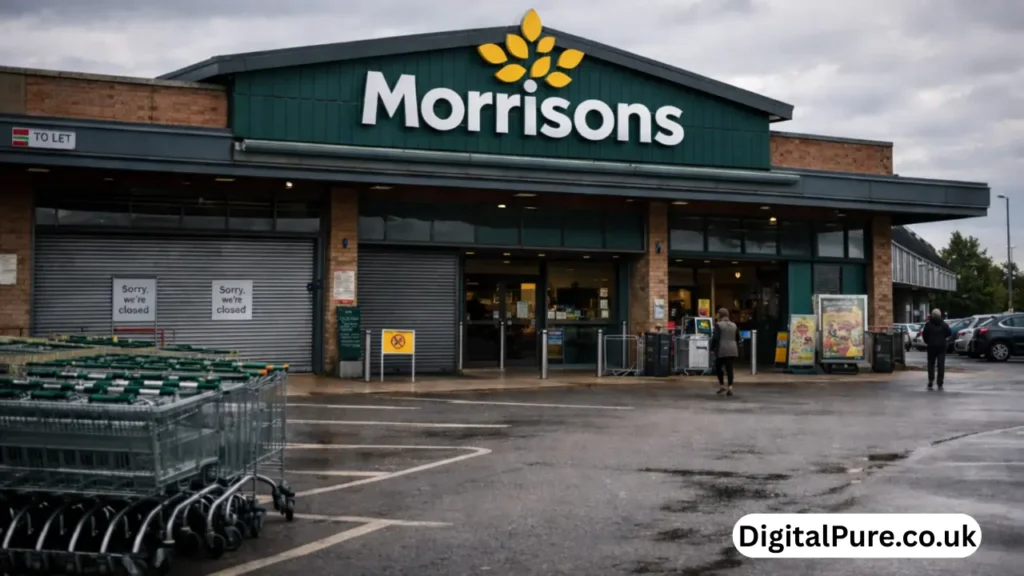
The UK grocery sector is going through a period of major change, and few developments have attracted as much attention as the recent morrisons store closures. Across towns and cities, shoppers are noticing the disappearance of familiar services, while employees and local communities are left questioning what these changes mean in the long term. As one of the country’s most established supermarket chains adjusts its operations, understanding the reasons behind the closures and their wider impact has become increasingly important.
Overview of Morrisons Store Closures
The current morrisons store closures represent a strategic restructuring rather than a collapse of the business. Instead of shutting down large supermarkets nationwide, Morrisons is closing selected convenience stores and removing underperforming in-store services.
Around 145 locations and services across the UK are affected. These changes are being rolled out in phases, with some closures already completed and others scheduled throughout the year. The focus is on improving efficiency, reducing costs, and aligning stores with modern shopping habits.
What Is Being Closed Under the Current Plan?
Morrisons Daily Convenience Stores
A number of Morrisons Daily convenience stores are part of the morrisons store closures plan. These stores operate in highly competitive local markets where margins are tight and customer loyalty is difficult to maintain. Locations with lower footfall or higher operating costs have been selected for closure.
In-Store Cafés and Dining Areas
One of the most visible changes involves the closure of many in-store cafés. These cafés once served as social spaces for customers, but changing lifestyles and reduced demand have made them less sustainable.
Specialist Counters and Services
The restructuring also affects traditional supermarket services, including:
- Meat counters
- Fish counters
- Florist sections
- Market Kitchen food areas
- Selected in-store pharmacies
While these services are disappearing from some locations, core grocery shopping remains available in most stores.
Why Are Morrisons Store Closures Happening?
Rising Operational Costs
Running cafés, counters, and convenience stores requires significant staffing, energy, and supply costs. With expenses increasing across the retail sector, Morrisons has chosen to remove services that are no longer financially viable.
Changing Customer Behaviour
Shopping habits have evolved. Many customers now prefer faster shopping trips, self-service options, and pre-packed goods. Traditional service counters and café dining no longer attract the same level of demand they once did.
Competitive Pressure in the Convenience Market
The convenience store sector is extremely competitive. In several areas, Morrisons Daily stores face strong competition from rival brands offering aggressive pricing and dense local coverage. This has directly influenced the morrisons store closures strategy.
Impact of Morrisons Store Closures on Employees
One of the most serious consequences of the morrisons store closures is the effect on workers. Hundreds of employees are expected to be impacted, particularly those working in cafés, counters, and closed convenience stores.
Morrisons has indicated that redeployment opportunities will be explored where possible, allowing some staff to move into other roles. However, redundancies remain unavoidable in certain cases, highlighting the human cost of retail restructuring.
How Local Communities Are Affected
The closure of services goes beyond business operations. In many towns, in-store cafés served as meeting points for older residents and regular shoppers. Their removal reduces social interaction opportunities, especially in areas with limited alternatives.
The loss of convenience stores can also affect access to affordable food, particularly for customers without easy transport. While large supermarkets may still operate nearby, the closure of a local store can significantly change daily routines.
Morrisons Store Closures in the Context of UK Retail
The morrisons store closures are part of a wider pattern seen across the UK retail industry. Supermarkets are adapting to:
- Increased operating costs
- Growth in online shopping
- Demand for lower prices
- Reduced reliance on labour-intensive services
Retailers are simplifying store formats and focusing on efficiency to remain competitive. Morrisons’ actions reflect this broader shift rather than an isolated business issue.
What This Means for Morrisons Customers
For most shoppers, essential grocery services will remain unchanged. Customers may notice fewer staffed counters and the absence of cafés, but core food ranges and everyday products continue to be available.
In the long term, the morrisons store closures aim to strengthen the business by focusing on sustainable operations. Whether this balance between efficiency and customer experience succeeds will shape how shoppers view the brand going forward.
Future Outlook After Morrisons Store Closures
Morrisons is expected to continue reviewing its store estate and service offerings. While no further large-scale closures have been officially confirmed, ongoing evaluation is likely as market conditions evolve.
The company’s future strategy will depend on how well it adapts to consumer expectations while maintaining profitability in a challenging retail environment.
Conclusion
The morrisons store closures mark a significant shift in how one of the UK’s major supermarkets operates. Driven by rising costs, changing customer habits, and intense competition, these closures reflect broader changes across the retail sector.
While the loss of services and jobs is difficult, the restructuring represents an effort to secure long-term stability. For customers and communities, the impact will vary, but the changes signal a new chapter for Morrisons in an evolving market.
Frequently Asked Questions
1. What does morrisons store closures mean?
It refers to the shutdown of selected Morrisons Daily stores and the removal of certain in-store services such as cafés and counters.
2. Are all Morrisons supermarkets closing?
No. Most large supermarkets remain open. The closures mainly affect convenience stores and specific services.
3. Why are cafés included in the morrisons store closures?
Cafés have seen reduced demand and high operating costs, making them less sustainable.
4. How many employees are affected?
Several hundred roles are impacted, with some staff offered redeployment where possible.
5. Will there be more morrisons store closures in the future?
Further reviews are possible, but no additional large-scale closures have been officially announced.
You May Also Read: Tesco Free Food Yellow Stickers: How the £0 Yellow Sticker Scheme Works in the UK