
Introduction
The m&s leeds store closure has become a widely discussed topic among shoppers and retail observers across the UK. As one of the most established retail brands, Marks & Spencer closing a store in Leeds is not just a routine business decision—it reflects deeper changes in how people shop and how large retailers are adapting to modern demands.
This article provides a complete and clear explanation of the m&s leeds store closure, including why it happened, what it means for local customers, and how it fits into the bigger transformation of UK retail.
Overview of the M&S Leeds Store
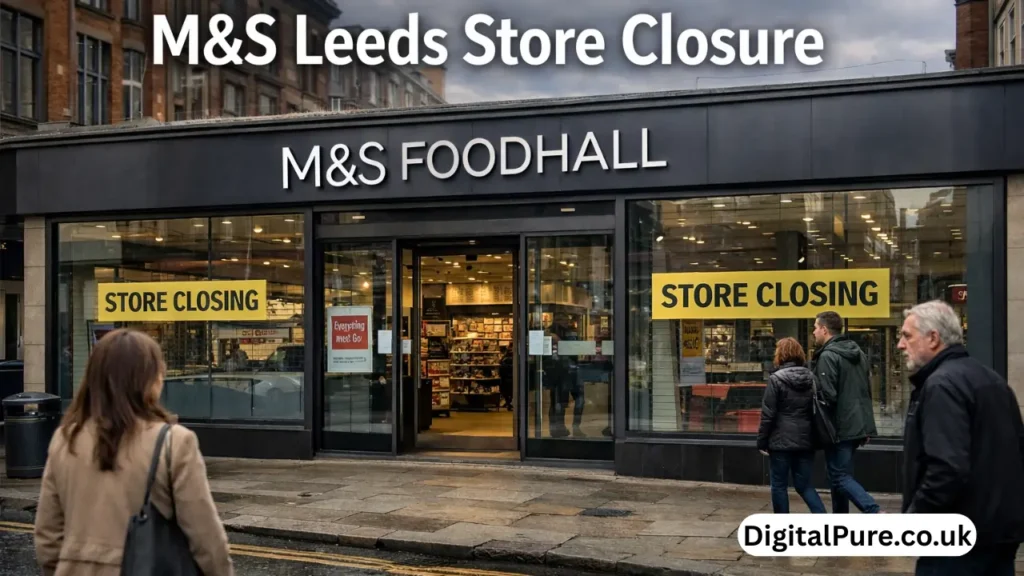
The store involved in the m&s leeds store closure was a Foodhall located on Wellington Street in Leeds city centre. It was positioned close to the train station, making it a convenient stop for commuters, office workers, and local residents.
Unlike traditional Marks & Spencer outlets, this branch focused only on food products. Customers regularly visited for ready meals, groceries, and quick shopping during busy schedules. Its central location meant it benefited from daily foot traffic, especially during peak working hours.
However, despite these advantages, the store was eventually selected for closure as part of a wider company review.
Why the M&S Leeds Store Closure Happened
There is no single reason behind the m&s leeds store closure. Instead, it resulted from a combination of strategic decisions and changing market conditions.
Shift Toward Larger and Modern Stores
Marks & Spencer has been reshaping its store network by focusing on larger locations that offer a better overall shopping experience. These stores are usually located in retail parks or spacious areas where customers can shop more comfortably.
The Leeds Foodhall was relatively small and limited in scope. It did not match the company’s current vision of operating bigger and more efficient stores.
Changing Customer Shopping Habits
Shopping habits in the UK have changed significantly over the past few years. More people now prefer online shopping or visiting large stores where they can buy everything in one trip.
The m&s leeds store closure highlights how smaller, convenience-based stores are becoming less essential. With fewer people commuting daily and more working remotely, the demand for city-centre food outlets has reduced.
Rising Operational Costs
Retail businesses are under pressure from increasing costs, including rent, energy, and wages. Maintaining smaller stores that generate lower profits is no longer practical for many companies.
By closing underperforming locations like this one, Marks & Spencer can focus on investing in stores that deliver stronger results.
Impact of the Closure on Local Community
The m&s leeds store closure has affected both customers and employees in different ways.
Reduced Convenience for Shoppers
Many people relied on the store for quick and easy access to food. Its closure means fewer options in the immediate area, especially for those working nearby.
Connection to Leeds History
Marks & Spencer has historical roots in Leeds, which makes the closure more significant for local residents. For some, it represents a shift away from traditional high street retail in the city.
Employee Adjustments
Employees working at the store were impacted by the closure. In many cases, staff are offered roles in nearby branches, but changes like this can still create uncertainty.
What Customers Can Do After the Closure
After the m&s leeds store closure, customers are encouraged to visit other Marks & Spencer locations in Leeds. Larger stores in the city provide a wider range of products, including clothing, home items, and expanded food sections.
These stores are designed to deliver a more complete shopping experience compared to smaller Foodhall formats.
The Bigger Retail Trend Behind the Closure
The m&s leeds store closure is part of a wider shift happening across the UK retail sector.
Decline of Small City-Centre Stores
Many retailers are reducing their presence in city centres due to lower foot traffic and changing shopping patterns. Smaller stores are being replaced by fewer but more efficient locations.
Growth of Retail Parks
Retail parks are becoming more popular because they offer parking, larger spaces, and convenience for customers. This shift is influencing where companies choose to open new stores.
Increased Focus on Online Shopping
Online platforms now play a major role in retail. Customers expect flexible options like home delivery and click-and-collect services. Physical stores are now designed to support these services rather than operate independently.
What the Closure Means for the Future of M&S
The m&s leeds store closure shows that Marks & Spencer is focusing on long-term growth rather than maintaining older store formats. The company is investing in modern stores that align with current shopping behavior.
Key Direction of the Brand
- Fewer but larger stores
- Better in-store experience
- Stronger integration with online shopping
This approach may help the company stay competitive, but it also changes how customers interact with the brand.
Conclusion
The m&s leeds store closure is a clear example of how the retail industry is evolving. While the closure may be disappointing for local shoppers, it reflects broader changes in consumer habits, business strategy, and economic conditions.
Marks & Spencer is adapting to these changes by focusing on efficiency, modern store formats, and digital growth. As the retail landscape continues to evolve, similar closures and transformations are likely to happen across the UK.
FAQs
1. What is the reason behind the m&s leeds store closure?
The closure happened due to strategic restructuring, changing shopping habits, and rising operational costs.
2. When did the M&S Leeds store close?
The store closed permanently in March 2025.
3. Was the Leeds store a full Marks & Spencer outlet?
No, it was a Foodhall that focused only on food products.
4. Where can customers shop after the closure?
Customers can visit other Marks & Spencer stores in Leeds, which offer a wider range of products.
5. Is this closure part of a larger trend?
Yes, it is part of a wider strategy where M&S is closing smaller stores and investing in larger, modern locations.
You May Also Read: Cêmnt: Complete Guide to Types, Uses, Manufacturing Process and Future Trends