

Introduction
Winter weather can sometimes change dramatically, bringing sudden cold waves, powerful snowstorms, and unexpected temperature drops. One of the key atmospheric factors behind these extreme events is the polar vortex. When scientists begin discussing a polar vortex collapse weather forecast, it often signals that major changes could occur in the global weather pattern. Understanding how this phenomenon works can help explain why certain winters become unusually severe.
This article explores what the polar vortex is, what happens when it collapses, and how a polar vortex collapse weather forecast can affect weather conditions across different parts of the world.
What Is the Polar Vortex?
The polar vortex is a large circulation of cold air and low pressure that surrounds the Arctic region. It exists high in the atmosphere, mainly in the stratosphere, where strong winds rotate around the North Pole during the winter season. These winds act as a barrier that keeps extremely cold Arctic air contained near the pole.
During a normal winter, the polar vortex remains relatively stable. Its powerful circular winds prevent the coldest air from spreading southward. However, the atmosphere is constantly changing, and certain disturbances can weaken this system. When scientists detect unusual warming in the upper atmosphere, they may begin issuing a polar vortex collapse weather forecast to indicate a possible disruption.
What Does Polar Vortex Collapse Mean?
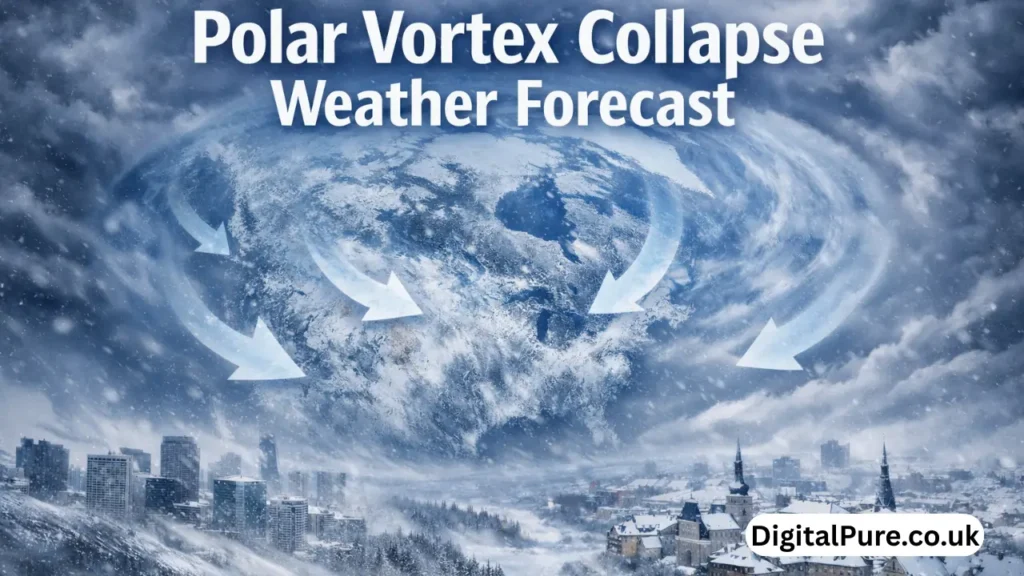
A polar vortex collapse occurs when the strong winds that maintain the vortex weaken significantly or become unstable. Instead of forming a tight circular pattern around the Arctic, the vortex may stretch, distort, or even split into separate sections.
Sudden Stratospheric Warming
One of the most common causes of a vortex collapse is sudden stratospheric warming. This event happens when temperatures in the stratosphere increase rapidly over a short period. The warming disrupts the circulation of the vortex and weakens the winds that normally keep Arctic air confined.
When meteorologists detect these changes, they often issue a polar vortex collapse weather forecast to warn that the cold air trapped in the Arctic could move toward lower latitudes.
Distortion of the Jet Stream
The collapse of the polar vortex can also influence the jet stream, which is a powerful band of wind that moves weather systems around the globe. When the vortex weakens, the jet stream can become wavy and unstable. This allows cold Arctic air to push southward into regions that normally experience milder winter temperatures.
How a Polar Vortex Collapse Affects Weather
A polar vortex collapse weather forecast often signals the potential for extreme winter conditions. Once the vortex weakens, the cold air previously locked near the Arctic can spread into North America, Europe, and parts of Asia.
Extreme Cold Waves
One of the most noticeable impacts is the arrival of intense cold waves. Temperatures can drop far below seasonal averages, sometimes reaching dangerous levels in certain regions. These cold outbreaks may last for several days or even weeks.
Heavy Snowstorms
Changes in atmospheric pressure and jet stream patterns can also increase the likelihood of snowstorms. When cold Arctic air meets moist air from other regions, it can create the perfect conditions for heavy snowfall.
Long-Lasting Winter Conditions
A disrupted polar vortex can lead to blocked weather patterns. These patterns may keep cold air trapped over certain areas for extended periods, resulting in prolonged winter conditions.
Regions Most Affected by Polar Vortex Collapse
When meteorologists issue a polar vortex collapse weather forecast, they usually focus on regions in the Northern Hemisphere where the effects are most likely to be felt.
North America
The United States and Canada often experience strong cold outbreaks when the polar vortex weakens. Cities that normally experience moderate winter temperatures can suddenly face severe cold conditions and heavy snow.
Europe
Europe can also experience significant impacts from a polar vortex collapse. Cold Arctic air may spread across the continent, bringing freezing temperatures and widespread snowfall.
Northern Asia
Parts of northern Asia may also experience colder weather when the vortex becomes unstable. These shifts demonstrate how atmospheric changes in the Arctic can influence weather across large parts of the world.
Why Meteorologists Monitor Polar Vortex Activity
Meteorologists carefully monitor the polar vortex because it provides valuable clues about upcoming winter weather. Changes in the stratosphere can occur weeks before noticeable effects appear at the surface.
A polar vortex collapse weather forecast allows scientists to prepare for possible cold outbreaks and severe winter storms. Weather models and satellite data help track temperature changes, wind patterns, and pressure systems in the upper atmosphere.
By studying these patterns, meteorologists can improve long-range forecasts and give communities time to prepare for extreme weather events.
Factors That Can Trigger a Polar Vortex Collapse
Several atmospheric processes can weaken the polar vortex and lead to a collapse.
Atmospheric Wave Activity
Large atmospheric waves moving through the atmosphere can push energy upward into the stratosphere. This energy disrupts the vortex and weakens its circulation.
Temperature Differences in the Arctic
Changes in Arctic temperatures can influence the stability of the vortex. When temperature differences between the pole and lower latitudes shift, the winds that support the vortex may weaken.
Climate and Seasonal Patterns
Seasonal atmospheric cycles and climate patterns can also affect the strength of the vortex. These influences are closely analyzed whenever meteorologists prepare a polar vortex collapse weather forecast.
Why Polar Vortex Events Matter
Polar vortex disruptions can have significant real-world impacts. Extreme winter weather can affect transportation, energy supply, and daily life in many regions.
Cold waves often increase heating demand and place pressure on energy systems. Snowstorms can disrupt travel and cause delays in air and road transportation. Agriculture may also be affected if sudden cold temperatures damage crops.
Because of these potential impacts, a polar vortex collapse weather forecast is important for governments, businesses, and communities that need to prepare for severe winter weather.
Conclusion
The polar vortex is an important part of the Earth’s winter weather system. When it remains strong and stable, it keeps Arctic air confined near the North Pole. However, when the vortex weakens or collapses, the resulting changes in atmospheric circulation can lead to dramatic weather events.
A polar vortex collapse weather forecast indicates that the atmosphere is undergoing significant changes that may allow cold Arctic air to move into lower latitudes. These events can bring extreme cold waves, heavy snowfall, and long-lasting winter conditions.
By understanding how the polar vortex works and monitoring early warning signs of instability, meteorologists can better predict and prepare for the impacts of severe winter weather.
FAQs
1. What is a polar vortex collapse weather forecast?
A polar vortex collapse weather forecast is a prediction that the polar vortex in the upper atmosphere may weaken or break apart, allowing cold Arctic air to move toward lower latitudes.
2. How does a polar vortex collapse affect winter weather?
When the polar vortex collapses, it can cause extreme cold waves, heavy snowstorms, and changes in the jet stream that lead to unusual weather patterns.
3. How long does it take for the effects of a polar vortex collapse to reach the surface?
The effects usually appear one to three weeks after the collapse because atmospheric changes need time to move from the stratosphere to the lower atmosphere.
4. Which regions are most affected by polar vortex disruptions?
North America, Europe, and northern Asia are the regions most commonly affected by polar vortex disruptions.
5. Does a polar vortex collapse happen every winter?
No, the polar vortex changes every winter, but a complete collapse or major disruption only occurs occasionally.
You May Also Read: Sciaticream: Complete Guide to Sciatic Nerve Pain Relief, Ingredients, Benefits, and Usage